|
Spring and early summer driving can be tough on your vehicle. After months of potholes, frost heaves, broken pavement, gravel roads, construction zones, and rough shoulders, your wheel alignment can gradually move out of specification. Sometimes it happens after one hard impact. Other times, it develops slowly enough that the driver simply adapts to the change without noticing how much the vehicle’s handling has shifted.
That is why a seasonal alignment inspection is such a smart service item. Your vehicle may still drive normally at first, but small alignment changes can affect tire wear, fuel efficiency, steering response, braking stability, and overall confidence behind the wheel. Before summer road trips, towing, weekend travel, or long highway drives, checking the alignment can help protect your tires and keep your vehicle driving the way it should.
What Wheel Alignment Actually Means
Wheel alignment refers to the position of the wheels in relation to the suspension and the road. Modern vehicles are engineered with very precise alignment angles, and even small changes can affect how the vehicle tracks, steers, and wears its tires.
The three main alignment angles are camber, caster, and toe. Camber is the inward or outward tilt of the tire when viewed from the front. Too much positive or negative camber can cause one edge of the tire to wear faster than the other. Caster is the forward or rearward angle of the steering axis, helping with straight-line stability and steering wheel return. Toe refers to whether the tires point slightly inward or outward when viewed from above. Incorrect toe can wear tires very quickly, even when the vehicle still feels fairly normal to drive.
A proper alignment service measures these angles against manufacturer specifications and adjusts the suspension where possible to restore the correct geometry.
Why Rough Roads Cause Problems
Potholes are one of the most common causes of alignment issues, but they are not the only concern. Rough pavement, curb impacts, road repairs, washboard gravel roads, and repeated smaller impacts can all affect suspension geometry over time.
When a tire strikes a pothole, the force travels through the tire, wheel, hub, control arms, steering linkage, strut, shock absorber, and bushings. Even if nothing visibly breaks, the impact can still shift alignment angles enough to affect handling and tire wear. Larger wheels and lower-profile tires can be even more vulnerable because there is less tire sidewall to absorb the impact.
Trucks, SUVs, crossovers, hybrids, and electric vehicles are also affected. Heavier vehicles can place additional load on tires and suspension components, especially when carrying passengers, cargo, tools, trailers, or recreational equipment.
Signs Your Vehicle May Need an Alignment
Alignment problems are not always dramatic. In many cases, the symptoms start subtly.
Common warning signs include a vehicle that pulls to one side, a steering wheel that sits off-centre, uneven tire wear, vibration, wandering at highway speeds, or a general feeling that the vehicle no longer tracks straight. You may also notice feathered tire wear, where one side of the tread blocks feels sharper than the other, or inner and outer edge wear that appears before the rest of the tread is worn down.
If there are clunking noises, looseness in the steering, or vibration over bumps, the suspension and steering components should also be inspected. A worn tie rod, ball joint, bushing, wheel bearing, shock, or strut can prevent the vehicle from holding alignment properly.
Why Alignment Protects Your Tires
Tires are a major investment, and poor alignment can shorten their life quickly. When the alignment is incorrect, the tires may scrub across the road instead of rolling cleanly. This creates extra friction, heat, and uneven tread wear.
Toe problems are especially damaging because they can wear tires rapidly without creating an obvious steering concern. By the time uneven wear is clearly visible, the tire may already be damaged beyond correction. An alignment can stop the cause, but it cannot replace tread that has already been worn away.
Proper alignment also helps the tires maintain consistent contact with the road, supporting braking, cornering, traction, and stability in changing weather conditions.
Alignment Can Improve Efficiency
When wheels are not properly aligned, the vehicle may need more energy to move down the road. Incorrect toe or camber can increase rolling resistance, which means the engine, hybrid system, or electric drive system has to work harder to maintain speed.
For gas and diesel vehicles, that can contribute to higher fuel consumption. For hybrid and electric vehicles, it can reduce efficiency and driving range. Keeping alignment within specification helps the vehicle operate as smoothly and efficiently as possible.
Why Professional Service Matters
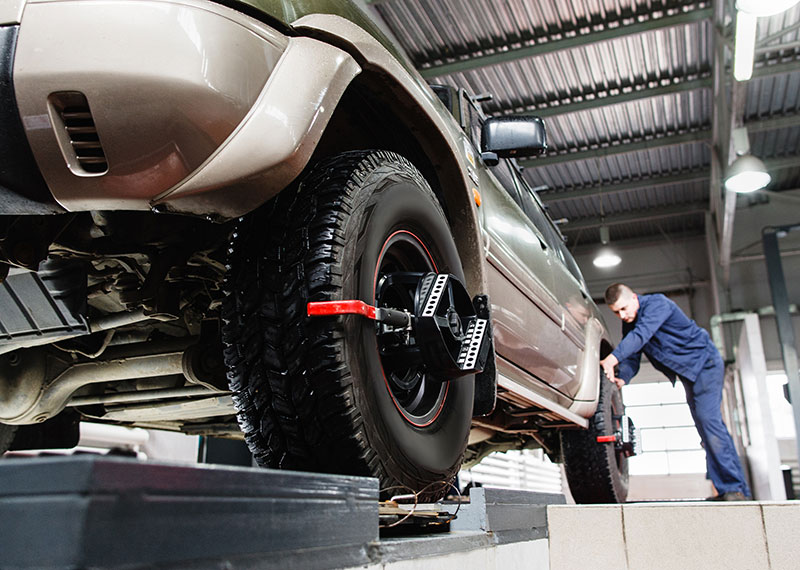
A proper alignment is more than a quick adjustment. Technicians measure the alignment angles using specialized equipment, compare the readings to factory specifications, inspect key suspension and steering components, and determine whether any worn parts need attention before adjustments are made.
This matters because an alignment is only as good as the parts holding the wheels in position. If a control arm bushing, tie rod, ball joint, or wheel bearing has excessive play, the vehicle may not hold alignment properly after the service.
On some newer vehicles, driver assistance systems may also require calibration after certain steering, suspension, alignment, sensor, or windshield-related repairs. Professional service helps ensure the work is completed correctly for the specific vehicle.
Keep Your Vehicle Tracking Properly
Wheel alignment is one of those services that quietly protects several important parts of your vehicle at the same time. It helps extend tire life, improve steering feel, support stable handling, reduce unnecessary rolling resistance, and keep your vehicle driving the way it was designed to drive.
After rough spring and early summer road conditions, an alignment inspection can help catch small issues before they lead to premature tire wear, reduced handling confidence, or more expensive suspension repairs. Whether you are planning a road trip, towing on weekends, commuting daily, or simply want your vehicle to feel right again, proper alignment is a smart part of seasonal maintenance.
For more information about wheel alignment service or to schedule an inspection, click the button below to book a service appointment.
|