|
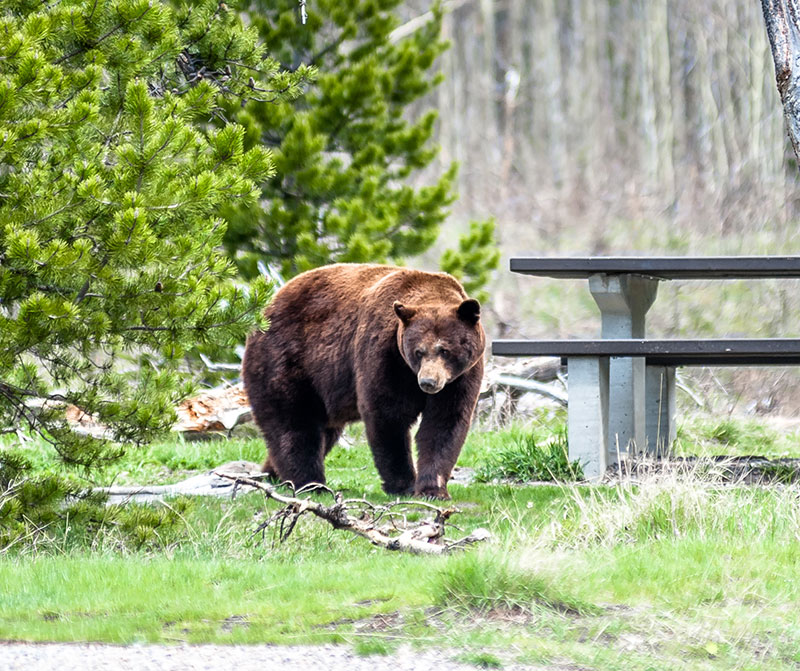
Sharing natural spaces with wildlife is part of the experience when hiking or camping. Enjoy the outdoors with confidence by learning what to do if you encounter any of the local inhabitants.
Spending time outdoors is one of the best ways to enjoy Canada’s parks, trails, campgrounds, and wilderness areas, and wildlife naturally come with the experience. Thankfully, these animals generally want nothing to do with people, and at most, you will likely catch a glimpse from a safe distance away. Still, knowing how to behave in their territory and what to do if you have a close encounter can help keep everyone safe.
The best wildlife encounter is the one that never happens. Make sure you heed any wildlife advisories and trail closures to give them the space they need. When traveling through a wildlife habitat, it is also a good idea to make yourself known so that the animals can hear you coming. Talking with companions, clapping occasionally, or calling out around blind corners can reduce the chance of surprising an animal at close range.
If you do see wildlife, your best course of action is to keep your distance. Never approach an animal for a closer look or a photograph. A good rule of thumb is to stay at least 30 metres away from animals such as deer and elk and at least 100 metres away from larger predators like bears and cougars. You’re too close if the animal is changing its behaviour because of your presence.
If you encounter wildlife at closer range, try to stay calm. Turning your back and running is almost never a good idea because predators like bears and cougars have a strong chase instinct. Instead, you should start slowly backing away to create space from the animals while speaking confidently. If the animal behaves aggressively, then make yourself appear larger, make noise, wave sticks, or throw rocks.
In wild country, you should always carry bear spray and know how to use it. It should be easily accessible rather than buried in a backpack. Bear spray can also be used on cougars and other large animals.
These other large animals you may encounter, like moose, elk, and deer, deserve just as much respect as predators. Watch for signs of aggression, such as pinned ears, stomping feet, raised hair, or repeated bluff charges. Trees, large rocks, or other barriers can be used to put distance between yourself and the animal.
Wildlife encounters can also happen while driving. If you spot an animal along the road, slow down and continue past safely. Pulling over to watch or photograph wildlife can create hazards for other drivers and encourage animals to approach roadsides. In fact, Parks Canada recently instituted a no-stopping zone along the Bow Valley Parkway in Banff after “bear jams” caused by unsafe parking to photograph or even approach grizzly bears.
Finally, the most important rule to remember when it comes to sharing the outdoors is to never feed wildlife. Animals that learn to associate humans with food can become bold and lose their natural fear of people, increasing the risk of conflict. Secure food whenever you are camping or spending time outdoors, and never intentionally offer food to an animal directly.
Seeing wildlife in its natural habitat can be one of the highlights of spending time outdoors. As long as you navigate these moments carefully and respectfully, the experience can remain a positive one for you and for the animals in our great outdoors.
|