|
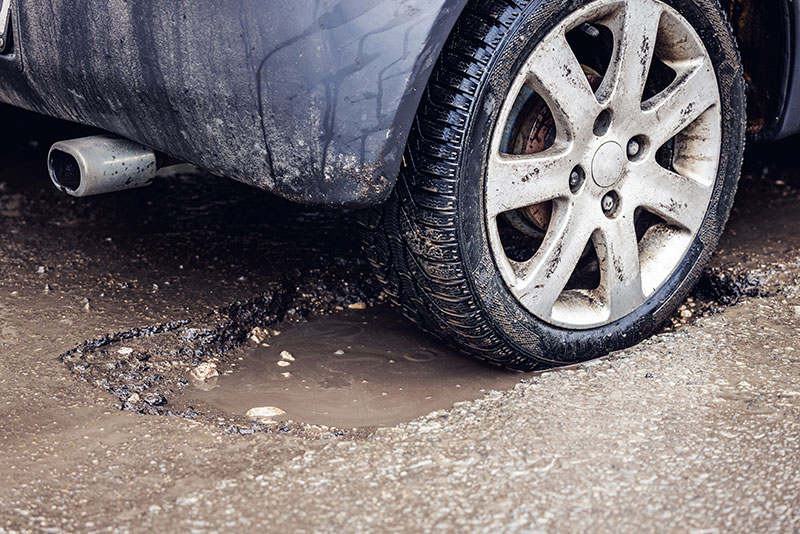
As winter fades, potholes begin to make their appearance. Understanding why they form, how to adjust your driving, and how to protect your vehicle can make spring travel less stressful.
When winter finally gives way to spring, the roads often emerge cracked, uneven, and unpredictable. One of the most common issues caused by this seasonal wear is the formation of potholes. More than just minor annoyances, hitting a pothole can turn an otherwise routine drive into unexpected vehicle damage. But, with a bit of patience and extra attention, you can navigate pothole season like a pro.
Potholes develop from repeated freeze and thaw cycles as the seasons change. When water seeps into small fractures in the road, it freezes, expands, and weakens the surface over time. Traffic passing over these weakened spots causes chunks of asphalt to break away, leaving potholes that appear seemingly overnight.
Suspension and alignment often take the brunt of pothole damage, though the issue may not be obvious right away. Over time, however, it can lead to uneven tire wear, vibrations while driving, or steering issues like your vehicle pulling to one side. If you notice any of these signs, it is a good idea to get your vehicle inspected sooner rather than later. Addressing possible suspension and alignment issues early can help prevent more dangerous (and expensive) problems down the line.
Keeping your vehicle properly maintained is especially important during pothole season and can help mitigate some of these issues as well. Tire pressure, in particular, makes a difference in how well your vehicle can handle rough roads. Checking tire pressure regularly and keeping it within the recommended range will help your tires do their job properly.
As with any driving hazards, awareness is your first line of defence against potholes. They can be surprisingly difficult to spot, especially when hiding in shadows or filled with water. Your best bet is to keep a safe following distance so that you can see the road ahead of you more clearly and have extra time to react. Watching the vehicles ahead of you for brake lights or swerves can also hint at hazards that you might not see right away.
Slowing down on roads that look rough or poorly maintained will also help you spot hazards more quickly and help protect your tires, wheels, and suspension. This will also give you time to make a smooth lane change, as swerving suddenly around a pothole can be dangerous. Braking sharply is also not a good idea, as it will make the impact harder on your suspension and rims. The best course of action when facing an unavoidable pothole is to stay straight and steady and ease off the accelerator.
If you do hit a pothole hard, then taking a moment to check your vehicle can save you a lot of trouble later. Once it’s safe to get out, look for visible damage such as a flat tire, a bulge in the sidewall, or a bent rim. Pay attention to how the vehicle feels as well, looking out for any shaking and pulling.
While it’s not possible to avoid every pothole on the road, mindful driving and basic car maintenance will help reduce the impact of pothole season and keep you safer on the road all year long.
|