|
Summer driving places a surprising amount of stress on the rubber components under your hood. While drivers often think about oil changes, tires, brakes, and air conditioning before a long drive, belts and hoses are just as important to vehicle reliability. These parts may not be large or expensive compared to major mechanical components, but when they fail, the result can be immediate and inconvenient.
A cracked serpentine belt, swollen coolant hose, weak clamp, or deteriorated vacuum line can quickly turn a normal commute or weekend road trip into a roadside service call. Hot weather, long drives, heavy traffic, towing, and air conditioning use all increase underhood temperatures. That added heat can expose rubber parts that were already aging, worn, loose, or contaminated.
A summer belts and hoses inspection is a simple, practical way to catch problems before they lead to overheating, charging system failure, power steering concerns, air conditioning issues, or engine performance problems.
Why Belts and Hoses Matter
Belts and hoses support several critical vehicle systems. Depending on the vehicle, a single serpentine belt may drive the alternator, water pump, air conditioning compressor, and power steering pump. Some vehicles may use additional accessory belts, while others may have electric power steering or electric water pumps. Regardless of the exact design, belt condition remains essential to proper vehicle operation.
Hoses are just as important. Coolant hoses carry hot coolant between the engine, radiator, heater core, thermostat housing, coolant reservoir, and related components. Other hoses may support the fuel vapour system, positive crankcase ventilation system, turbocharger system, brake booster, vacuum controls, or emission systems.
When these components are in good condition, they quietly do their job in the background. When they fail, the symptoms can appear suddenly.
How Summer Heat Accelerates Wear
Rubber and synthetic materials naturally deteriorate over time. Heat is one of the main factors that speeds up that process. Every time the engine warms up and cools down, belts and hoses go through a heat cycle. Over thousands of kilometres, this can cause rubber to harden, crack, glaze, swell, soften, or lose flexibility.
Summer driving increases that stress. Underhood temperatures are higher, air conditioning use adds load to the accessory drive system, and stop-and-go traffic reduces airflow through the engine compartment. Vehicles used for towing, hauling, long highway trips, or steep grades may experience even greater heat buildup.
Road salt, oil leaks, coolant contamination, power steering fluid, and engine cleaning chemicals can also damage rubber. A belt or hose that looks acceptable at a quick glance may be weakened by age, internal deterioration, or contact with leaking fluids.
The Serpentine Belt Does More Than You Think
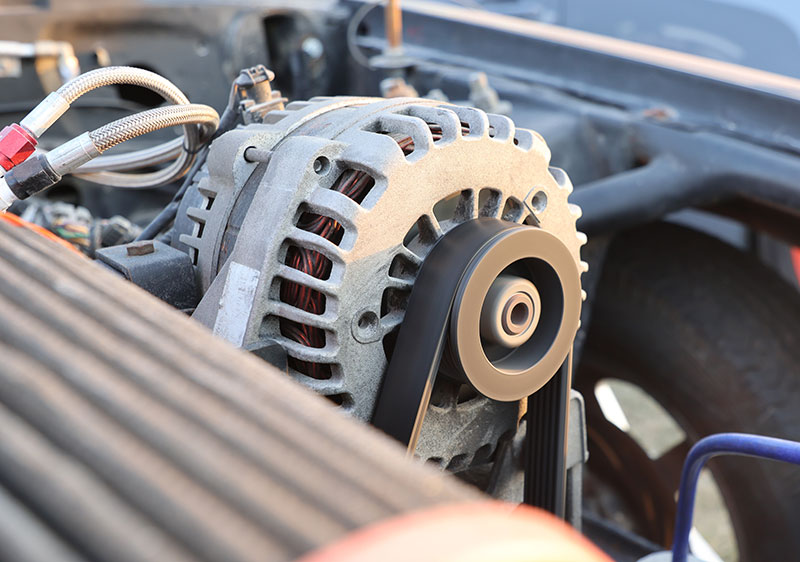
The serpentine belt is one of the most important wear items under the hood. It transfers engine power from the crankshaft pulley to several accessory components. If that belt slips, cracks, stretches, or breaks, the vehicle can quickly lose essential functions.
A worn serpentine belt may cause squealing noises, chirping sounds, weak charging output, reduced air conditioning performance, or intermittent power steering assist on vehicles equipped with hydraulic power steering. If the belt drives the water pump, a failure can also cause the engine to overheat.
Modern serpentine belts do not always show obvious cracks the way older belts did. Some newer belt materials wear by losing rib material, which reduces grip on the pulleys. This can cause slipping even when the belt appears mostly intact. A professional inspection can check belt rib depth, tension, alignment, glazing, contamination, and pulley condition.
Tensioners and Pulleys Are Part of the System
A belt inspection should not stop with the belt itself. The tensioner and pulleys are just as important. The belt tensioner keeps the correct pressure on the belt so it can grip the pulleys properly. If the tensioner becomes weak, seized, noisy, or unstable, the belt may slip or wear unevenly.
Idler pulleys and accessory pulleys should also rotate smoothly without wobble, grinding, or excessive noise. A failing pulley bearing can create a whining or growling sound and may eventually seize. If a pulley locks up, it can damage or break the belt.
This is why replacing only the belt may not always solve a belt noise or wear issue. The full accessory drive system needs to be inspected as a group.
Coolant Hoses and Overheating Risk
Coolant hoses operate under heat and pressure every time the vehicle runs. They must carry hot coolant while resisting pressure changes, vibration, engine movement, and chemical exposure. Over time, hoses can weaken from the inside out.
Common warning signs include cracks, swelling, soft spots, hardened rubber, leaks near clamps, coolant stains, or a sweet smell from the engine compartment. A hose that feels unusually soft may be deteriorating internally. A hose that feels extremely hard may have lost flexibility and become more prone to cracking.
Coolant hose failure can quickly lead to overheating. If a hose bursts or leaks heavily, coolant loss may occur faster than the driver expects. Continuing to drive with low coolant or an overheating engine can cause serious damage, including head gasket failure, warped cylinder heads, or complete engine failure.
Small Hoses Can Cause Big Problems
Not every hose under the hood carries coolant. Many vehicles also use vacuum hoses, PCV hoses, fuel vapour lines, turbocharger control hoses, and emission system hoses. These smaller parts can affect drivability, fuel efficiency, idle quality, brake assist, emissions performance, and check engine light operation.
A cracked vacuum hose may cause a rough idle, hesitation, lean fuel mixture, or poor acceleration. A damaged PCV hose can affect crankcase ventilation and may contribute to oil leaks or sludge buildup. A leaking turbocharger hose or charge pipe connection can reduce boost pressure and performance.
Because these smaller hoses are often tucked behind covers, intake components, or engine accessories, they may be missed during a casual visual check. A professional inspection can identify problems that are not obvious from above.
Warning Signs Drivers Should Watch For
Belts and hoses can fail without much warning, but many problems do provide early clues. Drivers should pay attention to squealing or chirping noises when starting the vehicle, turning the steering wheel, or using the air conditioning. A battery warning light, rising temperature gauge, coolant smell, visible leaks, rough idle, or sudden loss of air conditioning performance may also point to a belt or hose concern.
Other signs include steam from under the hood, repeated low coolant warnings, cracks on visible rubber parts, or fluid residue around hose connections. Any of these symptoms should be inspected promptly.
Why Professional Inspection Is Worthwhile
A proper belts and hoses inspection is more detailed than simply looking for visible cracks. Technicians can inspect belt wear, pulley alignment, tensioner movement, hose condition, clamp security, fluid contamination, coolant leaks, pressure concerns, and signs of contact with surrounding components.
They can also confirm whether the correct belt is installed, whether a hose is rubbing against another part, and whether an oil or coolant leak is damaging rubber components. Catching these issues early can help prevent breakdowns and reduce the risk of related repairs.
Stay Ahead of Summer Wear
Belts and hoses are easy to overlook because they usually operate quietly until something goes wrong. During summer, however, heat, traffic, road trips, towing, and air conditioning use can push aging rubber components closer to failure.
A seasonal inspection helps protect your vehicle from avoidable problems and gives you greater confidence before longer drives. Whether you are planning a vacation, commuting in hot weather, towing a trailer, or simply staying ahead of maintenance, checking belts and hoses is a smart step toward dependable summer driving.
For more information about belts and hoses inspection or to schedule your seasonal service, click the button below to book a service appointment.
|