|
A thunderstorm can quickly make driving a lot more dangerous, requiring patience, caution, and some smart adjustments. Learn how to stay safe in challenging, stormy conditions on the road.
Summer thunderstorms often come seemingly out of nowhere and pose a particular challenge when they happen while you are on the road. Heavy rain can reduce visibility, strong winds can affect vehicle control, and hail can create unexpected hazards. While you can’t control the weather, you can take steps to stay safe when conditions deteriorate.
The first and most important thing to do when you find yourself driving through a thunderstorm is to reduce your speed. Driving too fast in wet conditions increases stopping distances and makes it more difficult to react to hazards. Slowing down gives you more time to respond.
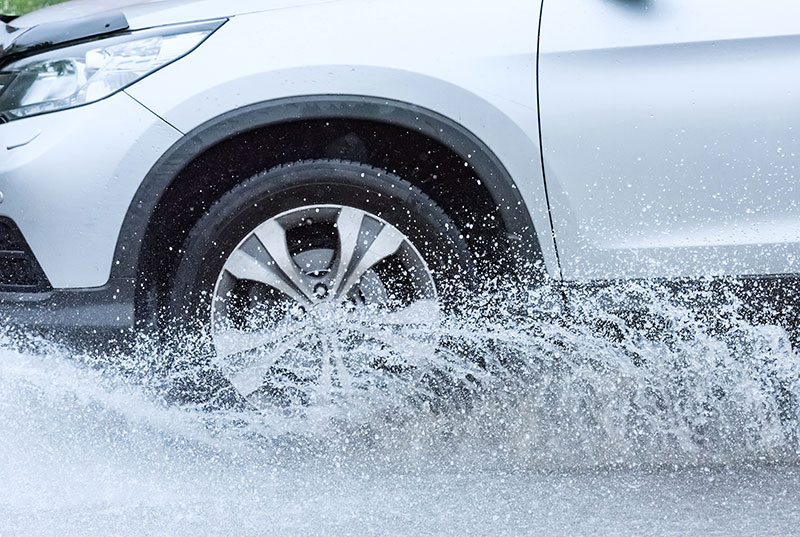
One of the biggest risks of driving during heavy rain is hydroplaning: when a layer of water between your tire and the surface of the road causes the tire to lose traction. If you feel your vehicle begin to hydroplane, stay calm and avoid slamming on the brakes or making any sudden steering movements. The best thing to do is ease off the accelerator and steer gently in the direction you want to go.
Thunderstorms can also bring powerful wind gusts that affect vehicle handling, particularly for larger vehicles, trucks, SUVs, and vehicles towing trailers. Crosswinds may be especially sudden and powerful, so keep your hands firmly on the wheel and watch for branches, debris, and other objects that may be blown onto the road.
No matter how cautious and careful you are, sometimes the safest decision during a storm is simply not to keep driving. One of the main reasons you might need to pull over is due to extremely limited visibility caused by intense rainfall. If you can’t see more than a few car lengths ahead of you and your windows start to fog too heavily and quickly, it is not safe to continue.
Hail is another hazard that can arrive with little warning and may make it too dangerous to continue. If hail begins falling, slow down and increase your following distance. Sudden braking or sharp steering movements can lead to a loss of control, especially if hail starts accumulating on the road surface and becomes severe.
In these and other dangerous situations, try to find a location where it is safe to stop and wait out the storm. However, you should avoid stopping on the shoulder of a highway, as other drivers will also have difficulty seeing you. Look instead for a parking lot, rest area, or other designated area if possible. If it is hailing, then good options include covered areas or sturdy structures, but you should avoid stopping beneath trees, as falling branches can pose an additional hazard during a storm.
Finally, where there is thunder, there is also lightning. Fortunately, in the very unlikely event that your vehicle is struck by lightning, its metal frame can help direct the electrical current around the outside and away from occupants. If lightning activity becomes particularly intense, however, it may be a sign that conditions are severe enough to pull over and wait for the storm to pass. Just make sure to park away from trees or utility poles.
Ultimately, the best way to be ready for unpredictable thunderstorms is to practice good driving habits and prioritize safety if you find yourself dealing with extreme weather. Arriving a little later is always better than pushing through dangerous conditions.
|