|
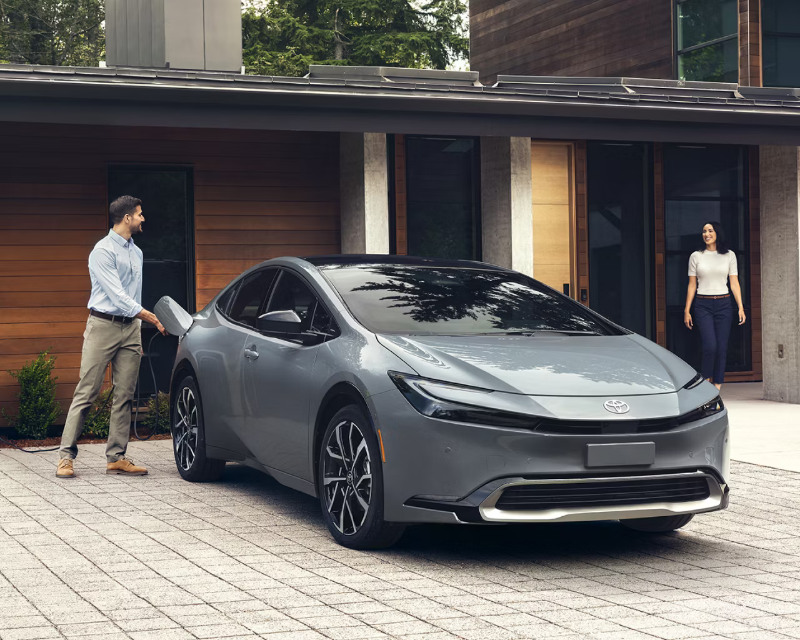
Some vehicles earn attention because they are practical. Others do it because they are stylish or unexpectedly enjoyable to drive. The 2026 Prius Plug-In Hybrid manages to bring all of those qualities together in one package. It looks sharper than many people expect from an electrified vehicle, feels more refined and more responsive than earlier generations, and adds the kind of plug-in flexibility that can make everyday driving noticeably more efficient. For drivers who want a car that feels modern in every sense, the Prius Plug-In Hybrid makes a very strong impression.
A large part of that appeal comes from how well Toyota has balanced efficiency with performance. The 2026 Prius Plug-In Hybrid uses a 2.0-litre 4-cylinder DOHC 16-valve engine as part of its plug-in hybrid system, and total output is rated at 220 horsepower. That is an important figure because it gives the car a far more energetic character than many buyers may expect from something designed first and foremost to reduce fuel use. This is not simply a commuter-minded efficiency special. It has enough power to feel confident when merging, passing, and carrying speed smoothly on the highway, while still delivering the quiet and polished operation buyers want from a modern electrified car.
The plug-in side of the equation is equally compelling. The SE trim is rated for up to 72 kilometres of electric driving range, while higher trims are rated at up to 64 kilometres. Those numbers are significant because they allow many shorter daily drives to be completed with little or no gasoline use when the battery is fully charged. That can make a real difference in day-to-day ownership. Errands, commuting, and local driving can often lean heavily on the electric side of the powertrain, while the gasoline engine remains available for longer distances without requiring a change in routine. In that sense, the Prius Plug-In Hybrid offers an especially practical form of electrification. It gives drivers meaningful electric capability without the range limitations or charging dependence of a fully electric vehicle.
Total range is another strength. On a full charge and full tank, the SE is rated for up to 962 kilometres of total driving range, while upper trims come in at up to 890 kilometres. That breadth of capability is one of the reasons the Prius Plug-In Hybrid stands out. It can be efficient and electrically capable during the week, then shift comfortably into longer-distance travel without any concern about finding a charger along the way. For many drivers, that blend of electric driving and traditional long-range freedom represents the ideal middle ground.
The fuel economy figures are also impressive even when the battery charge is depleted and the vehicle is operating more like a conventional hybrid. The SE is rated at 4.4 L/100 km in the city and 4.6 on the highway, while the XSE and XSE Premium are rated at 4.7 city and 5.0 highway. Those are strong numbers for a car with this level of performance and feature content. They reinforce the idea that the Prius Plug-In Hybrid is not only efficient in ideal plug-in use, but also highly economical when used as a normal hybrid over longer distances.
Beyond the powertrain, the car’s engineering contributes to a much more sophisticated driving experience than many people still associate with the Prius name. Toyota notes that the Prius Plug-In Hybrid is built on the second-generation TNGA-C platform. It is 50 mm lower, 20 mm wider, and 25 mm longer than the previous generation, with the battery positioned under the rear seat for a lower centre of gravity. These are not small details. They help explain why the vehicle feels more planted, more stable, and more cohesive on the road. The wider stance, reduced weight, and increased rigidity all work together to create a car that feels more athletic without giving up ride comfort.
That more dynamic feel is also supported by the car’s design. The Prius Plug-In Hybrid has a low, wide stance and a sleek silhouette that gives it a much more assertive presence than earlier versions of the Prius. LED headlights and tail lamps are shaped not just for appearance, but also to help smooth airflow. Available 19-inch alloy wheels on the XSE and XSE Premium add to the more sporting character. What is especially appealing is that this design is not trying too hard. It simply looks cleaner, sharper, and more premium than many buyers may expect from a plug-in hybrid sedan.
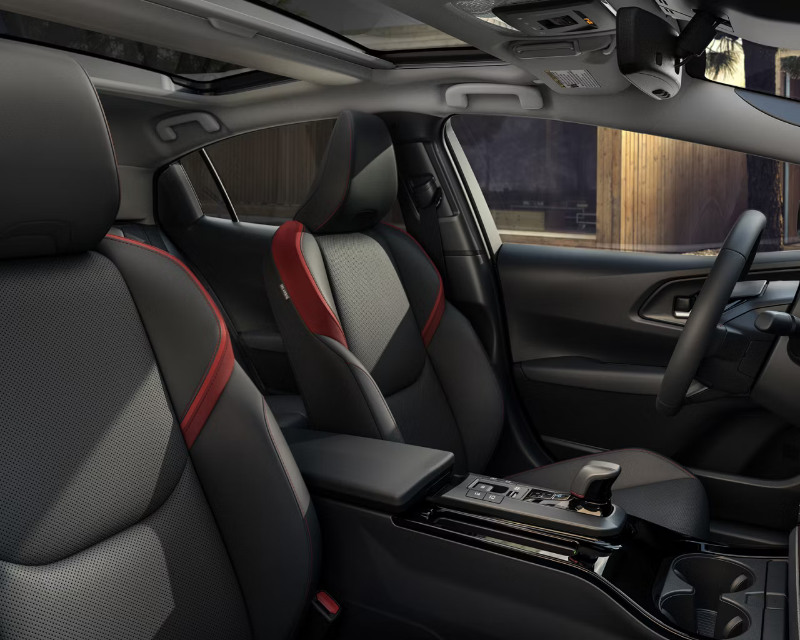
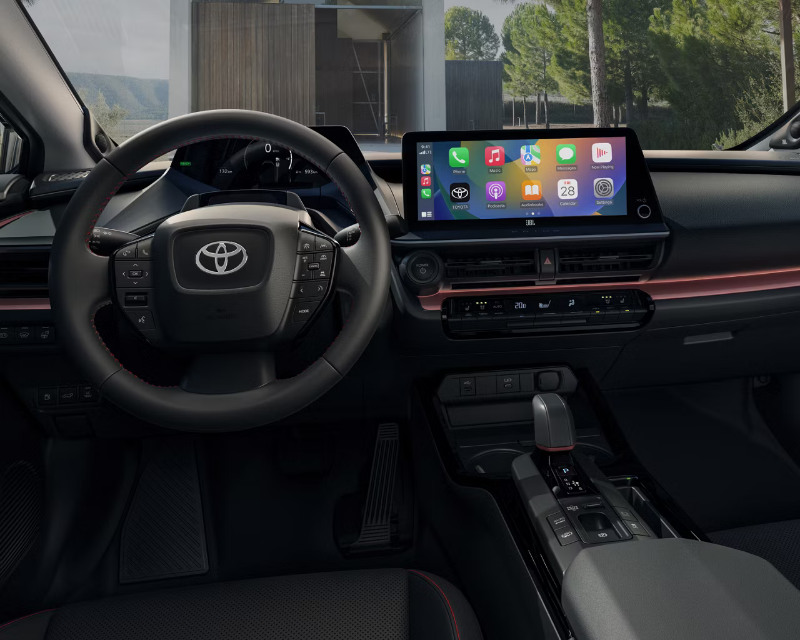
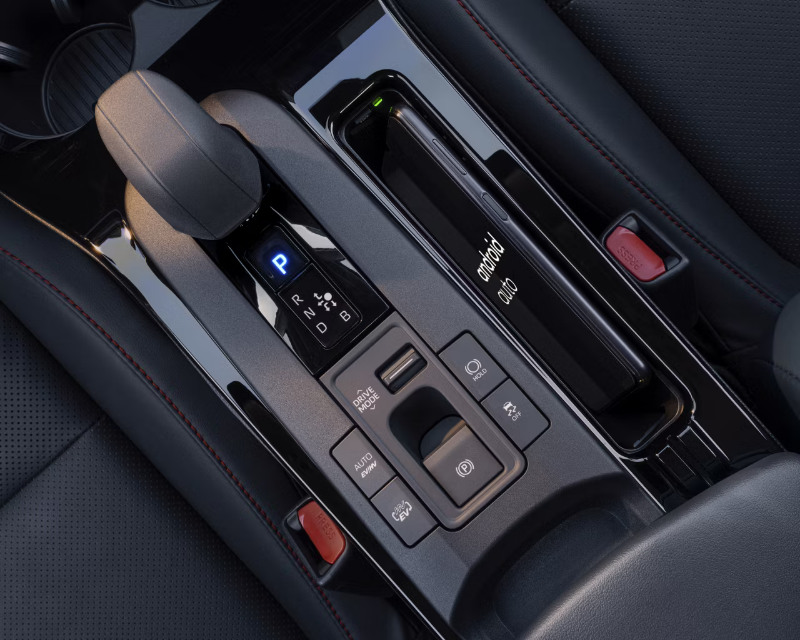
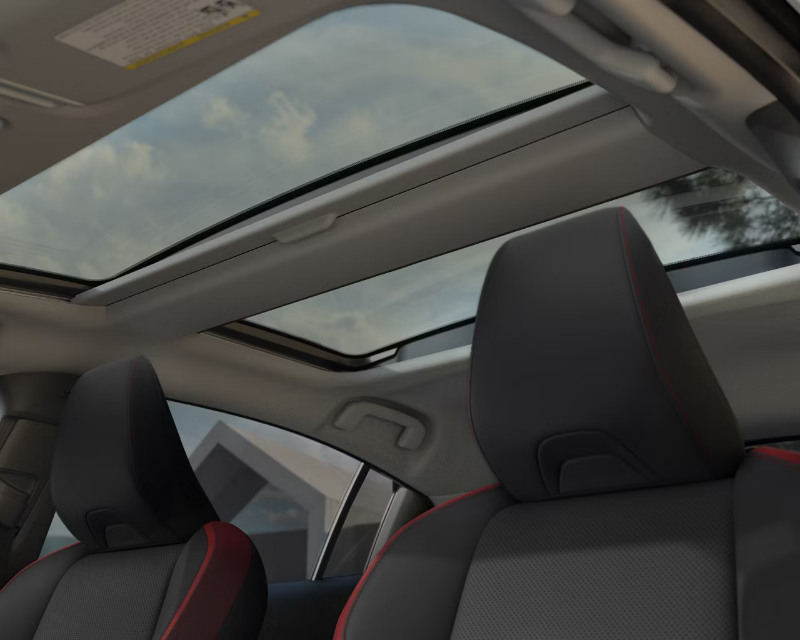
Inside, the Prius Plug-In Hybrid continues that same modern approach. Toyota describes the cabin as sophisticated and driver-centric, with soft-touch materials and a clean layout. Heated front seats are included, and available features include Qi wireless charging, a larger touchscreen, and premium trim details that help the car feel far more upscale than the price category might suggest. The overall effect is a cabin that feels intentionally designed rather than merely functional. It is comfortable, easy to use, and clearly meant to make the driver feel engaged rather than detached.
Technology also plays an important role in the car’s appeal. Toyota’s multimedia system is integrated into the experience in a way that supports navigation, connectivity, and daily usability without making the cabin feel cluttered. The Prius Plug-In Hybrid also benefits from regenerative braking, which converts braking energy into electric energy to help recharge the battery on the go. That is one of the core technical advantages of a vehicle like this. It is constantly finding ways to recover energy that would otherwise be lost, helping improve efficiency in real-world driving.
The addition of the Nightshade Edition further broadens the lineup’s appeal. With black 19-inch wheels, black exterior badging, black door handles, and other darkened visual details, it gives the Prius Plug-In Hybrid a more dramatic and individualized appearance. That matters because it shows how far this model has evolved. It is no longer just an efficiency leader. It is now a vehicle that can also appeal to buyers who care about design, personality, and road presence.
What makes the 2026 Prius Plug-In Hybrid so compelling overall is that it feels complete. It offers meaningful electric range, strong total system output, excellent fuel efficiency, sophisticated packaging, and a design that now feels genuinely desirable. It is easy to imagine this vehicle fitting smoothly into a wide range of lifestyles because it does not ask the driver to compromise much of anything. It is efficient, but not dull. It is stylish, but not impractical. It is advanced, but still simple to live with.
For drivers looking for a car that combines electric flexibility, hybrid efficiency, modern styling, and a surprisingly engaging overall character, the 2026 Prius Plug-In Hybrid deserves a closer look. Click the button below to learn more about the vehicle.
Please Note: The details of this article were accurate at the time it was written. Manufacturers may change the details of any vehicle’s specifications at any time without notice.
|